Effective Reduction of Carbon Black in Print and Packaging to Improve Recyclability and Comply with the PPWR
Carbon black pigments are a primary disqualifier for PPWR (Packaging and Packaging Waste Regulation) compliance because they absorb near-infrared (NIR) light, rendering packaging invisible to optical sorters in Material Recovery Facilities (MRFs). This causes recyclable materials, such as black polyethylene or polypropylene, to be misidentified as contaminants and routed to incineration or landfill, resulting in low recyclability grades.
To meet the mandatory Design for Recycling standards, manufacturers must eliminate carbon black and switch to NIR-detectable dark pigments or alternative UV-stabilization chemistries (like HALS systems) that allow sorting machinery to correctly identify and recover the material. Packaging that cannot be sorted effectively often falls below Grade C (less than 70% recyclable), which is banned from the EU market starting in 2030.
The Challenge for the Print and Packaging Industry
In printing, black ink (or “K”) plays an important role in data preparation and image reproduction. Black is used to effectively print elements like text and barcodes, and it is also deliberately used in image separation to stabilize color output and reduce overall ink consumption. However, regular carbon pigment-based black ink conflicts with recyclability goals due to these properties.
A simple reduction of K in image reproduction is possible. While this would improve recycling-related factors, it would also cause massive inefficiencies, additional printing waste, and potential color variations in the print production process. Because printing is a stochastic process and never 100% physically stable, reducing the vital K-component too much makes it harder for process control systems to maintain print stability. Even advanced systems can only react to variations, not fully eliminate them.
Switching to carbon-free printing inks is not easy; it comes with limitations, additional costs, and production process adjustments for both ink manufacturers and printers.
AI-Optimized Data Preparation to Reduce Carbon Black by Up to 69% While Maintaining Print Stability
Reprointelligence is a pioneer in AI-optimized color management. Printers contact us looking for solutions to reduce black ink consumption while maintaining production performance. To meet both requirements efficiently, we developed a special feature using our established CCAI technology.
Our flagship product, RIcms (Reprointelligence Industrial Color Management System), is now equipped with an additional switch that instructs the CCAI to intelligently optimize and avoid K in less critical areas, while preserving critical image colors such as neutrals, grays, skin tones, and key brand color simulation areas.
69% Carbon Black Reduction
The results are exceptional. Using our predictive CCAI technology, we are able to reduce carbon black in the printed image gamut by up to 69% without compromising print stability.
For more information please contact us
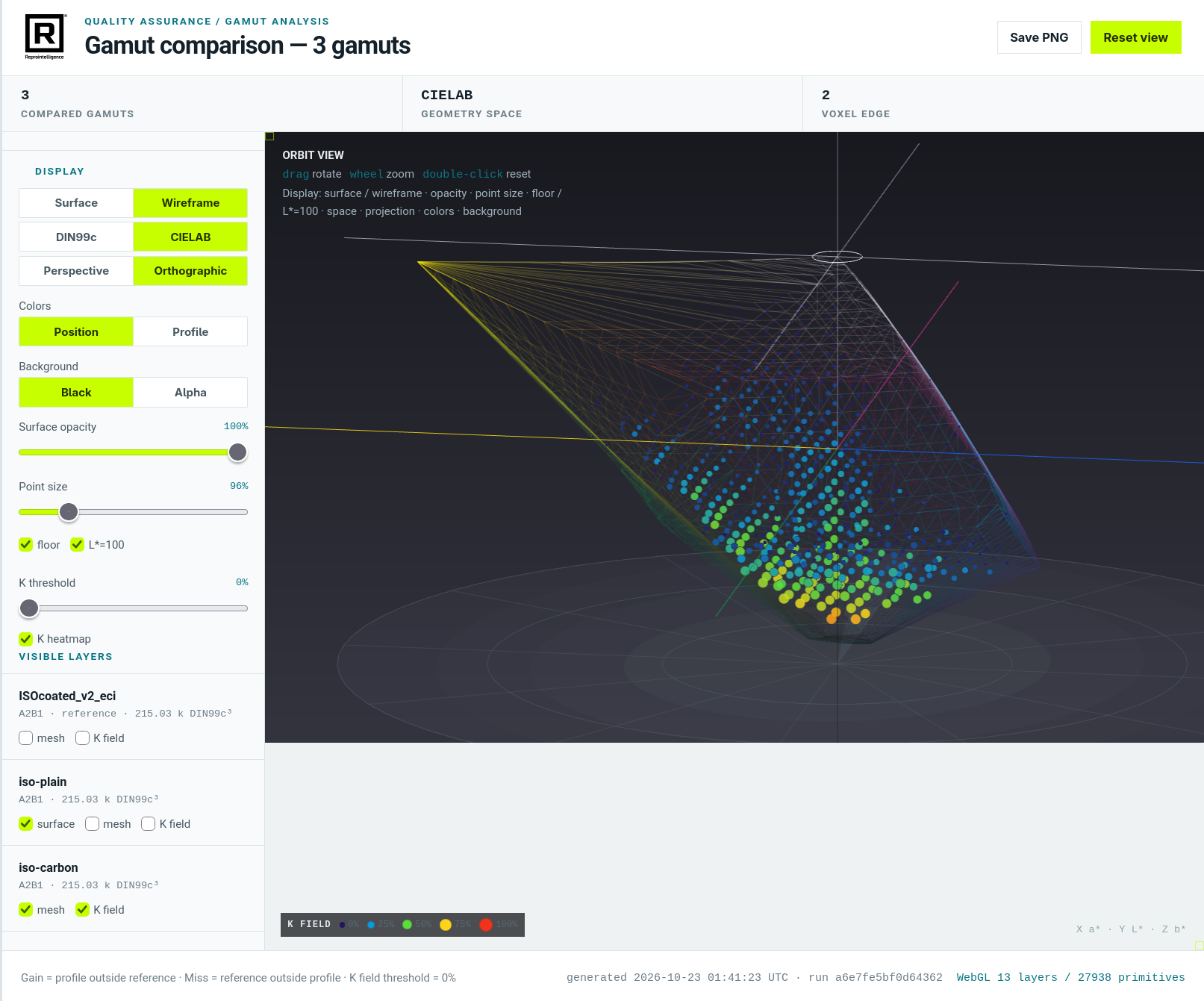
Images showing standard black presence in printing gamut vs. Reprointelligence CCAI-optimized K-distribution for carbon black reduction:
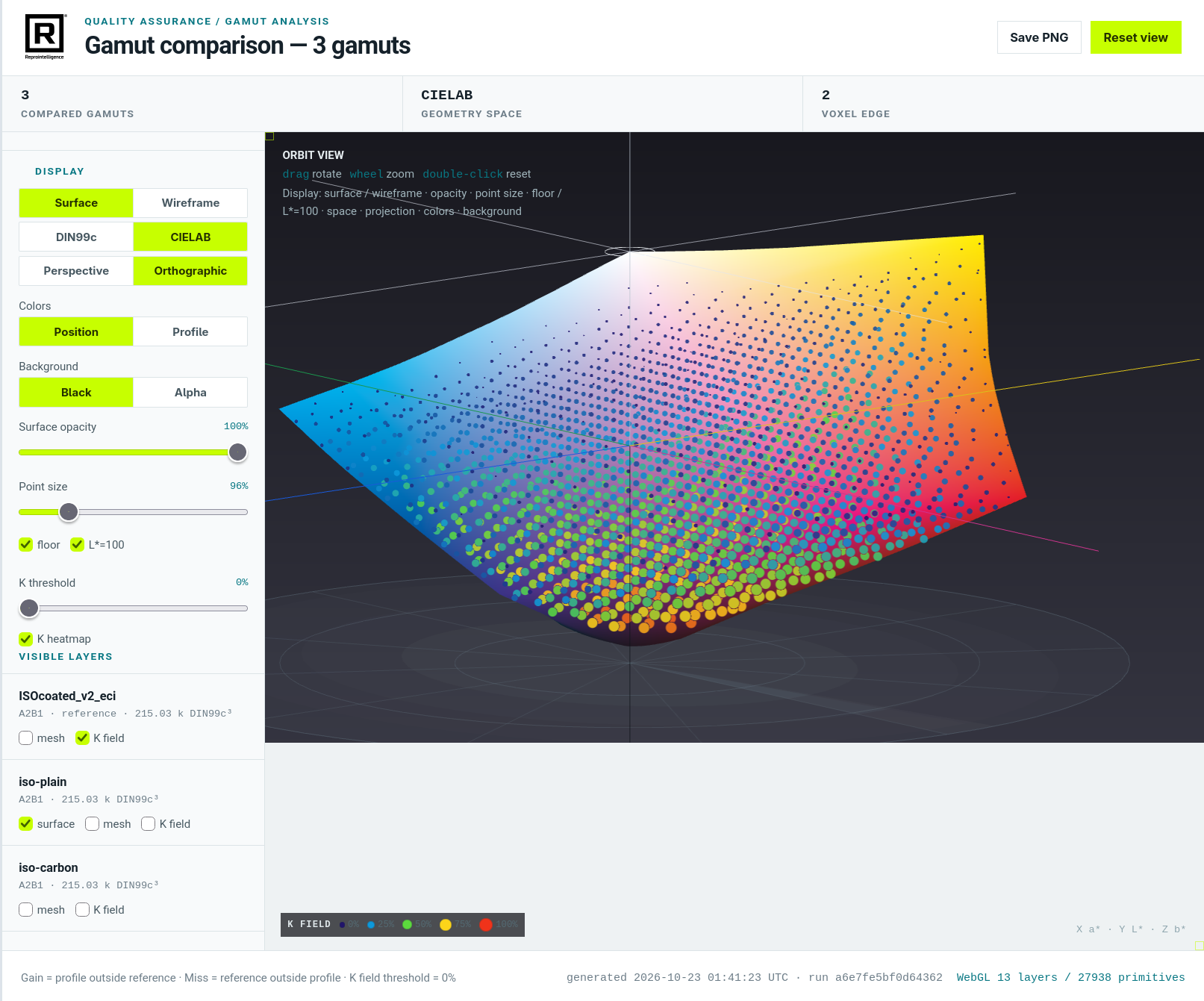
CCAI-Optimized Black Distribution using the new –carbon-k 1 feature in RIcms. A total improvement of 69% over industry default Profiles without Print-Ability Compromises.
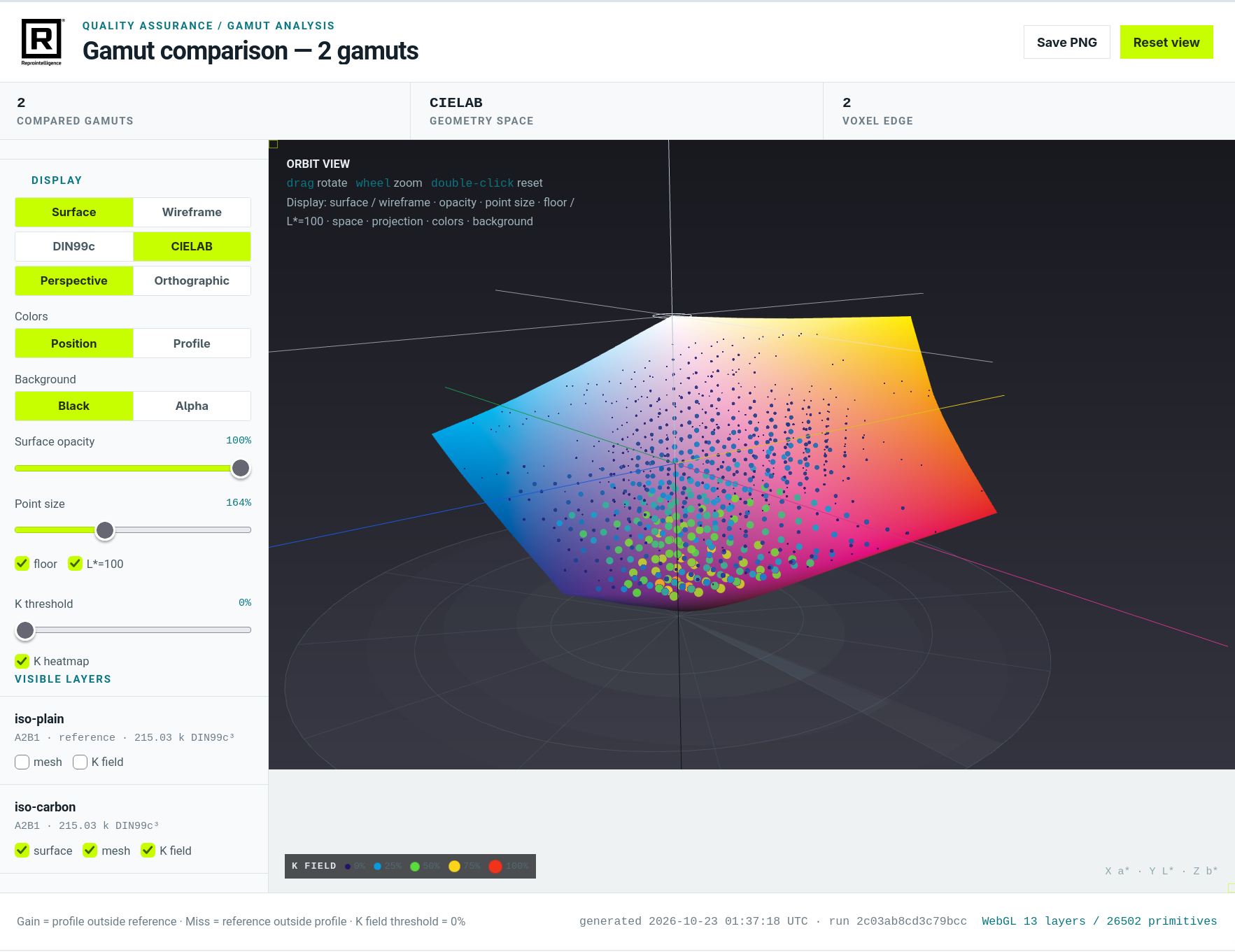
AI-optimized Color Re-Composition to match PPWR Requirements easier but maintain Print Production Performance and Color Predictability